Executive Function Solutions for Middle Schoolers on the Autism Spectrum: A Guide for Special Ed Leaders
Moving up to middle school can be tough for any student, and especially overwhelming for students in special education, including those on the autism spectrum. Suddenly, they’re managing several classes, lockers, teachers, and multistep projects. It’s a lot to manage, and it regularly highlights some students need more support with organization and executive functioning.
If a student keeps losing homework, missing deadlines, or has a hard time with transitions, it’s usually not about behavior. It’s a sign they need help building skills.
As special education leaders, you have the opportunity to implement real solutions. While ABA is often thought of for early intervention or behavior support, it’s also a great way to help middle school students build executive functioning skills.
By partnering with Applied ABC, your district can bring in BCBAs and RBTs to work right alongside your middle school teams. Together, we can set up practical, data-driven systems that help students move from feeling overwhelmed to becoming more independent.
1. Shift from “Get Organized” to Task Analysis
Telling a middle schooler to get organized” or “clean your backpack” is often too vague. Instead, we use task analysis in ABA to break things down into simple teachable steps.
Our Applied ABC team can work with your staff to create clear checklists for challenging transition times, making things easier for everyone.
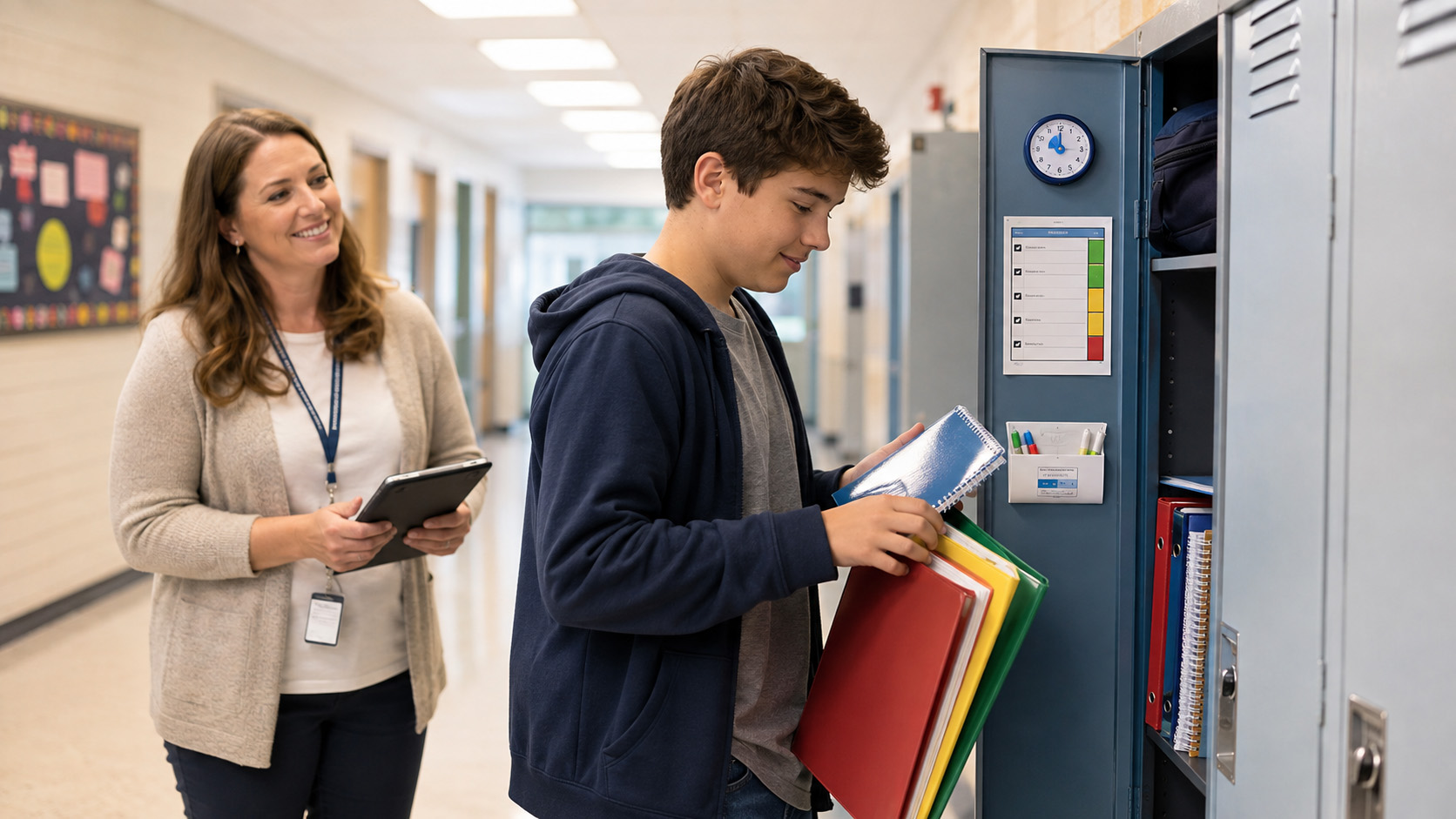
The Locker Transition:
- Open your locker.
- Place your Morning Binder on the top shelf.
- Grab your Afternoon Binder
- Zip your backpack.
- Close the locker.
How to Make It Work: Use meaningful visual checklists in all classrooms, resource rooms, and self-contained classes. When everyone is on the same page, students get the consistency they need to succeed.
2. Leverage Behavioral Momentum for Task Initiation
Getting started on a tough assignment can be a huge challenge for students who struggle with executive functioning. When they see a big packet, it can feel overwhelming, and that often leads to avoidance or acting out.
One way your team can help is by using behavioral momentum. This means starting with a couple of quick, easy tasks before proceeding to something more challenging.
- In Practice: An instructor might ask a student to write their name on the paper, color-code the headings, and answer a simple review question. Once the student has gained momentum and had a quick burst of success, the teacher introduces the first new, challenging problem.
- How to Make It Work: Our behavior specialists can show your teachers how to use this strategy during the first few minutes of independent work time, helping prevent bigger behavior problems before they start.
3. Replace Verbal Reminders with Visual Systems
If adults are always reminding students what to do, it can make students dependent on prompts and wear out staff. Instead, ABA focuses on setting up the environment so that pupils receive implicit cues about what to do next.
- Visual Timers: Time is an abstract concept. Visual countdown clocks make time concrete, helping students understand exactly how long they need to sustain focus before a transition.
- “First/Then”: Frame schedules visually. First, complete 15 minutes of writing, then access 3 minutes of a preferred sensory break.
- How to Make It Work: On-site BCBAs can help design visual support, token systems, and easy-to-use tracking tools for your classrooms. Investing things like Timers and digital choice boards can make a big difference, sometimes even more than adding extra staff.
4. Foster Social Navigation and Peer Engagements
Middle school brings new social challenges, like managing the cafeteria, busy hallways, and group projects. For many students, these situations can be especially tough if they struggle to organize their thoughts or communicate.
- In Action: Having behavior technicians in your classrooms and school-wide programs means students get real-time support as they learn to manage social situations with their peers.
5. Teach Mental Flexibility Through Planned Generalization
- Middle school schedules can change at a moment’s nostressful, fire drills, or a substitute teacher. Our clinical team can make small, planned changes to a student’s routine in a safe setting and then reinforce them right away for using a coping skill.
- The Systemic Fix: Encourage. How to Make It Work: Ask your behavior teams to include goals for flexibility and track progress throughout various settings, so students can use their skills everywhere from the classroom to the cafeteria.
Helping students build strong executive functioning skills isn’t about waiting for them to outgrow it. We need to teach these skills just like we do with reading or math, step by step, and with an intentional plan.
By using evidence-based ABA systems and flexible staffing, you help your team avoid burnout, reduce behavior referrals, and, most importantly, give your students the tools they need to become more independent in life to support middle school transitions
Ready to create a successful school year for your middle schoolers? Call Applied ABC today to see how we can help your team support the growth of executive function and student independence.