Make AAC Month Meaningful in Every Classroom
With the arrival of October, the school year transitions into cooler days, steady routines, and renewed chances to build meaningful connections with students. It’s also the time when we recognize AAC Awareness Month.
For educators, specialists, and school staff, AAC Awareness Month is a chance to highlight the importance of functional communication for every student. It’s also an opportunity to build a schoolwide culture where every learner has meaningful ways to participate, connect, and be heard.
Supporting students who use augmentative and alternative communication (AAC) is much more than managing devices or communication boards. At its heart, it honors each student’s voice and creates daily opportunities to:
-
Share ideas and express preferences
-
Build independence and confidence
-
Form authentic peer relationships
-
Take an active part in classroom life
The good news is that small, intentional actions can make a lasting difference. Here are practical ways school teams can work together this October—and throughout the year—to make communication access visible, valued, and consistent.
1. Build a Schoolwide Culture of Communication
AAC Awareness Month is a wonderful time to launch, refresh, or highlight schoolwide practices that support inclusive communication.
To get started, consider these ideas:
-
Morning Announcements & Assemblies: Launch October with a brief feature or story focused on how different tools help people communicate.
-
Student-Led Insights: When appropriate, invite students who use AAC, their peers, or staff members to share how communication devices and boards support participation in school life.
-
Visual Representation: Use posters, bulletin boards, and lunchtime displays to keep the message of communication accessibility visible and welcoming all month long.
2. Bring AAC Into Everyday School Life
The most effective AAC support happens in ordinary, everyday moments. When AAC is treated as a natural part of the school day—not something separate or unusual—students feel included, respected, and ready to learn.
Key Strategies for Classroom Integration:
-
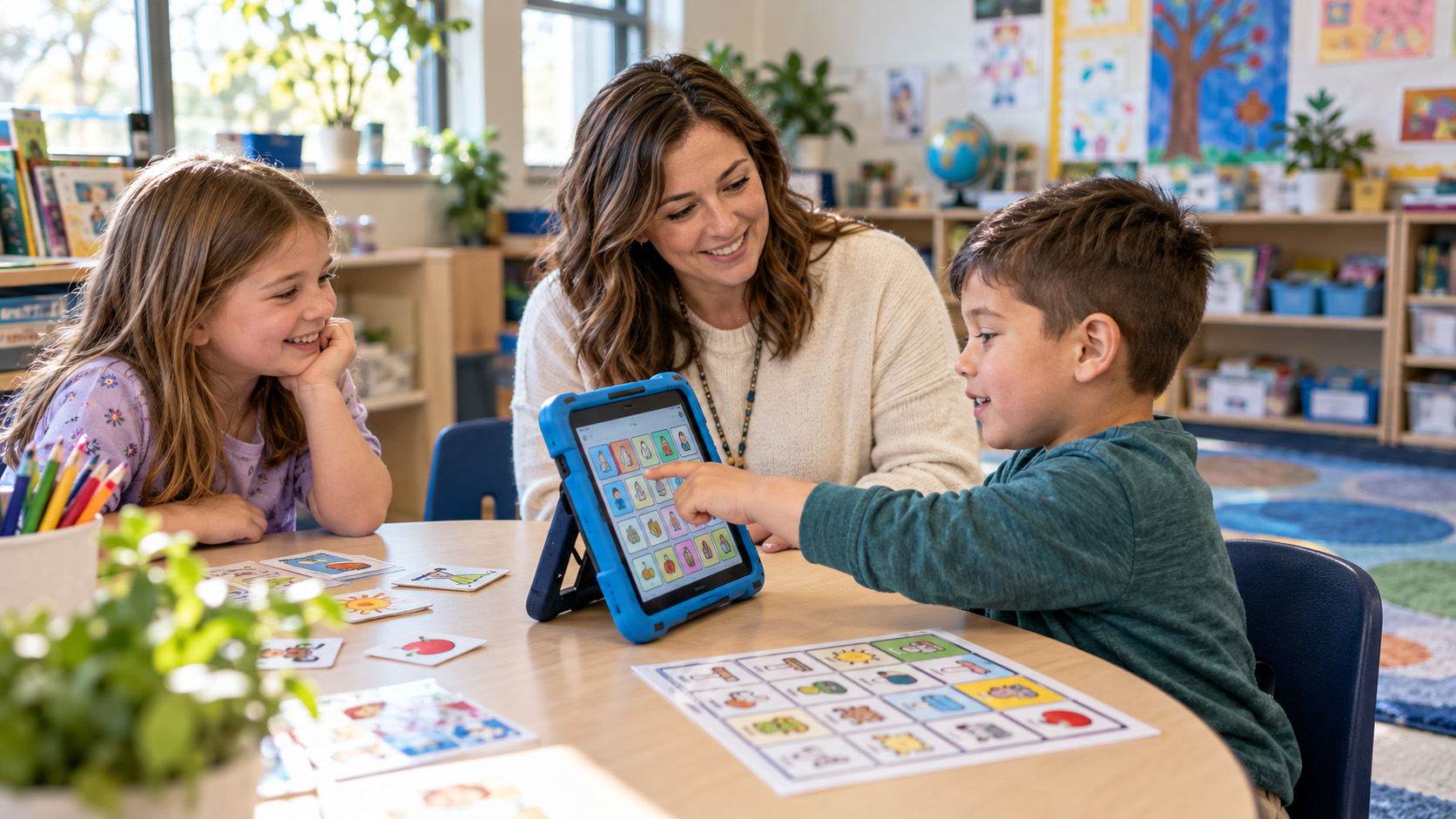
Model language pressure-free: One of the most effective ways to teach AAC is through modeling (aided language input). Use a student’s device or a printed communication board during lessons, transitions, and casual conversations. Model gently and consistently without demanding an immediate response.
-
Make inclusion engaging: Invite the whole class to use a projected communication board to answer questions, share ideas, or play learning games. This simple practice normalizes AAC, reduces stigma, and builds a respectful classroom community.
-
Check classroom access: Communication tools should be easy to find and reach. Instead of limiting tools to one desk or storing them away, keep AAC boards, posters, and visual supports available in shared learning centers and group spaces.
-
Protect device access: Treat communication tools as essential voices, not distractions or rewards. Keeping devices charged, available, and accessible throughout the day ensures students can communicate whenever they want to share something important.
3. Collaborate With Families and Specialists
Strong AAC support grows from intentional partnerships.
-
Families offer invaluable insight into what works at home, what motivates their child, and which communication techniques feel most natural.
-
Speech-Language Pathologists (SLPs), BCBAs, paraprofessionals, and educators bring specialized expertise that can be shared through peer demonstrations, collaborative planning, or brief Q&A sessions.
When school teams and families work together, students experience consistent, considerate communication support across every environment.
4. Challenge Common Myths About AAC
Another meaningful way to advocate during AAC Awareness Month is to address outdated assumptions with clarity and care.
Common Myth: Using AAC prevents or delays spoken language development.
The Reality: Research consistently shows that effective AAC systems red
uce frustration, support language acquisition, and give students more robust ways to express themselves alongside speech.
When the whole school understands and supports AAC, students gain far more than access to tools—they gain opportunities to build confidence, connect with peers, and share who they are. AAC Awareness Month is a powerful starting point for moving beyond accommodating communication differences toward actively celebrating them.
How Will You Support Communication This Week?
AAC Month is just the beginning. As educators and school staff, making accessible communication a daily priority creates life-changing opportunities for students.
Celebrate small wins, share strategies with colleagues, continue learning, and look for simple ways to make communication visible each day. Together, these efforts build a school community where all learners have the room, support, and encouragement to share their story.
Key Takeaways for Educators
-
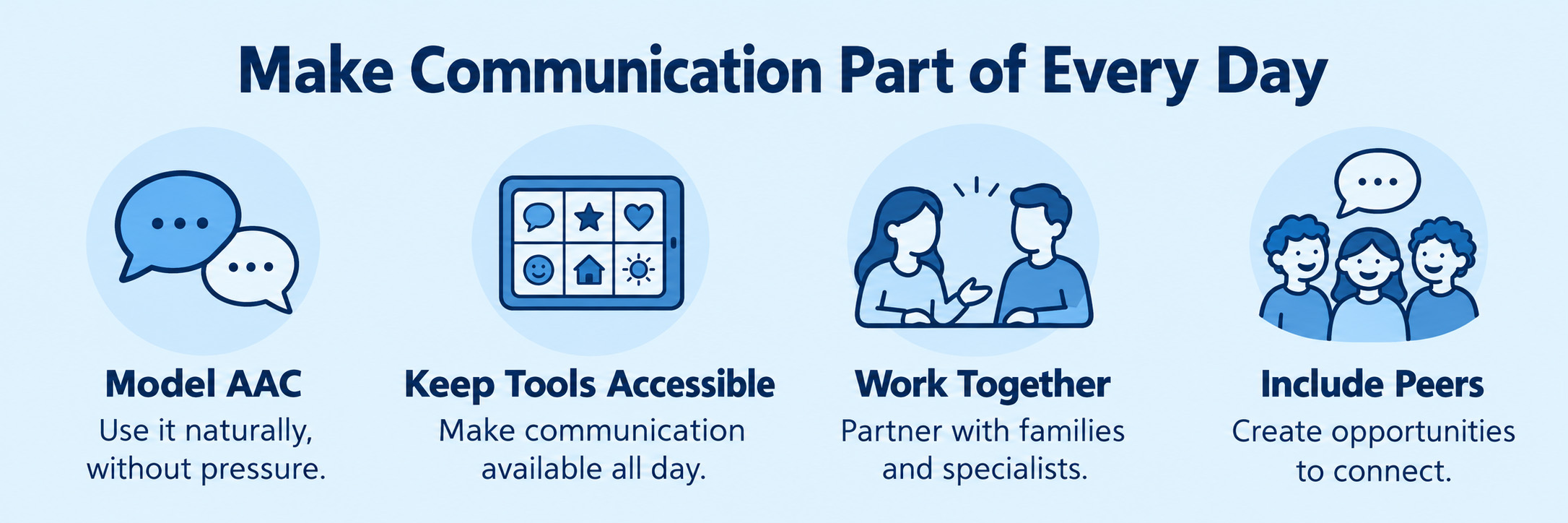
Model AAC daily without pressuring the student for a response.
-
Keep tools accessible across all school environments.
-
Collaborate continuously with speech therapists, support staff, and families.
-
Foster peer awareness to create an inclusive, supportive classroom community.