Honoring Heroes: Inclusive Veterans Day Activities for Special Education
Veterans Day activities for special education can help students connect with their community through meaningful, accessible experiences. From creating thank-you cards to welcoming a veteran into the classroom, simple activities can turn abstract civics concepts into opportunities to communicate, participate, and build connections.
Observed on November 11, Veterans Day honors people who have served in the United States Armed Forces. For educators, it offers an opportunity to explore service, gratitude, and community in ways that match students’ communication styles, sensory preferences, and learning needs.
The 2026 Veterans Day theme, “Veterans Helping Veterans and Their Families,” provides a starting point for discussing how people support one another. Teachers can connect this idea to familiar classroom experiences, such as helping a classmate, sharing materials, or checking in with someone who needs support.
Make Civics Concrete and Meaningful
Words such as service, citizenship, and patriotism may need more explanation than a definition alone can provide. Begin with familiar people and observable actions.
For example, explain that a veteran is someone who served in the military. Use photographs, age-appropriate books, and simple descriptions to introduce different examples of military service. Then connect community participation to actions students recognize: helping others, expressing appreciation, and contributing to a shared project.
Offer multiple ways to participate. Speaking, selecting a picture, using an AAC device, drawing, and gesturing can all be meaningful contributions to a civics lesson.
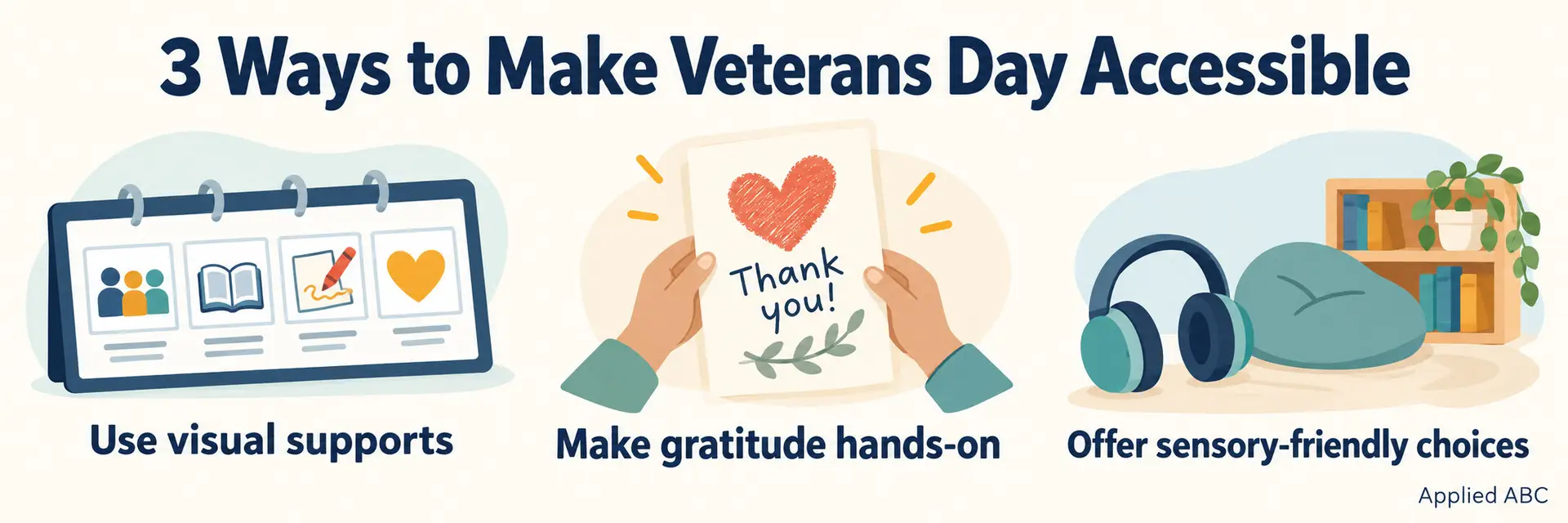
3 Accessible Veterans Day Activities for Special Education
1. Use Visual Supports to Introduce Veterans and Military Service
Pair a short picture book, read-aloud, or classroom discussion with photographs and visual vocabulary. Introduce a few useful words at a time, such as veteran, military, help, family, and thank you.
Keep students’ communication systems available throughout the activity. Model relevant words on an AAC device or communication board, and provide opportunities to comment, ask questions, express preferences, or request a break.
Adapt participation to individual learners:
- Match photographs to familiar vocabulary.
- Choose a picture to contribute to a classroom display.
- Use AAC to share a greeting or message.
- Respond through speech, gestures, pointing, or eye gaze, as appropriate.
Focus on understanding and connection. Students can participate meaningfully without giving the same response or using the same materials.
2. Build Functional Skills Through Thank-You Cards
Making Veterans Day cards gives students a concrete way to express appreciation while practicing communication, choice-making, and classroom routines.
Offer options such as drawing, dictating a message, selecting picture symbols, using adaptive stampers, or writing a short note. A student might choose colors, select a greeting, or decide which materials to use.
A simple visual sequence can make the project easier to follow:
- Choose a card.
- Pick materials.
- Add a message or picture.
- Place the finished card in the collection basket.
Coordinate with a local veterans’ organization before arranging delivery. Ask whether it accepts classroom cards and whether there are any guidelines for messages or materials.
The goal is a meaningful contribution that reflects each student’s choices and level of participation.
3. Connect With Veterans in Your School Community
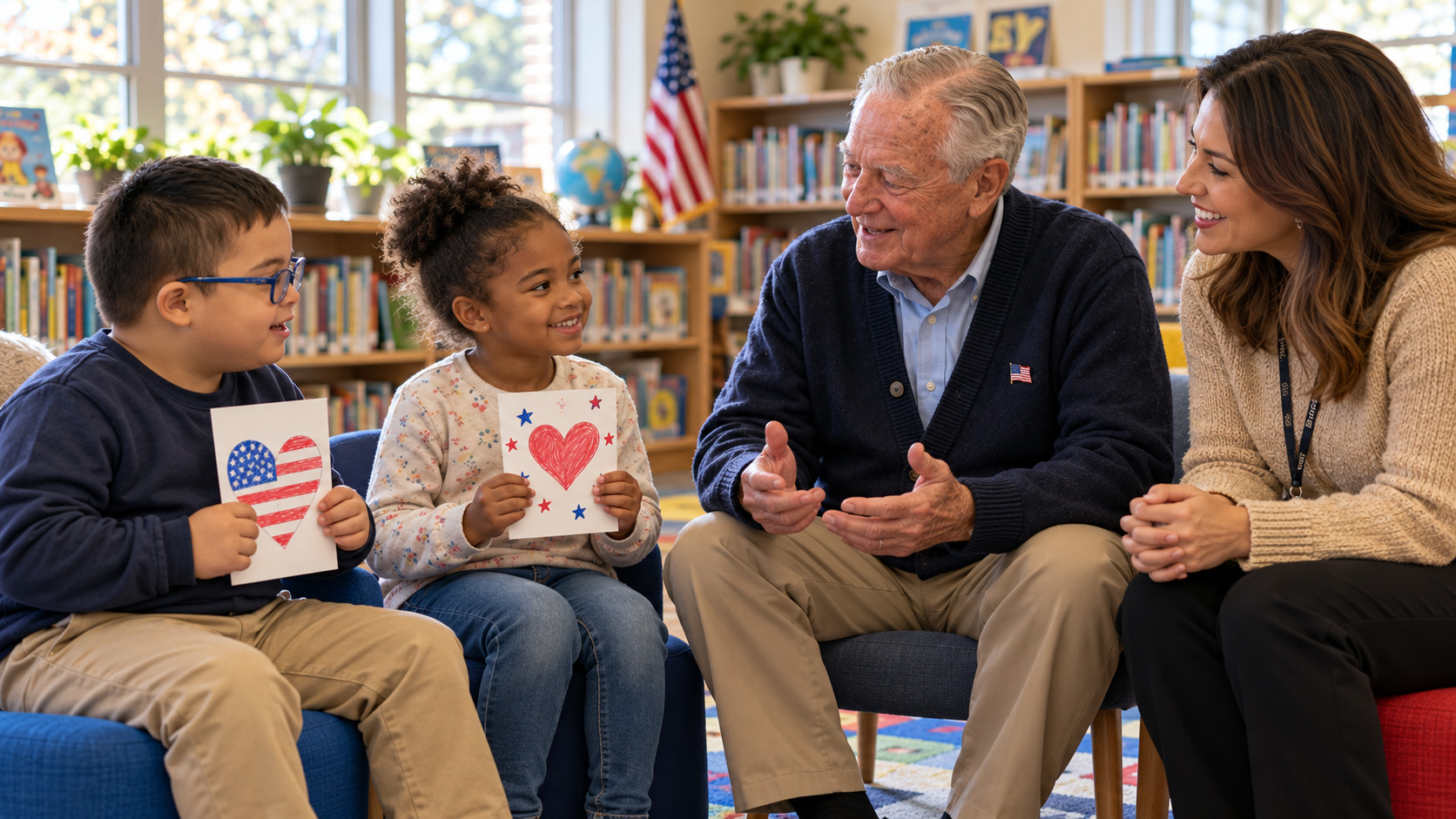
A short visit from a veteran can make classroom learning more personal. With their permission, invite a staff member, family member, or local community volunteer who has served to share an age-appropriate story about service, teamwork, or helping others.
Prepare both the visitor and students in advance. Share the visit’s length, communication options, and sensory considerations. Offer students a visual preview of who is coming and what will happen.
Students could welcome the guest with a greeting, present a card, or choose a prepared question. Keep participation flexible, including options to observe from a comfortable distance or step away.
If an in-person visit is unavailable, consider a brief recorded greeting or a classroom display featuring consenting members of the school community.
Plan Sensory-Friendly Veterans Day Activities
School assemblies may include loud music, applause, crowded seating, or changes in routine. Planning ahead gives students more ways to participate comfortably.
Preview the Event
Use a visual schedule, photographs, or a brief social narrative to explain where students will go, what they may hear, and how they can request support or leave.
Offer Sensory Supports
Make headphones and other familiar supports available according to individual preferences. Consider seating near an exit and allowing students to attend only part of the event.
Provide a Quiet Alternative
Offer a supervised, low-stimulation space with an accessible version of the lesson, such as a short book, picture-matching activity, or card-making materials.
Support Communication and Choice
Ensure students can communicate help, break, too loud, finished, or I want to stay using their usual communication methods. Follow individualized plans and coordinate with the student’s support team.
Participation can look different for every learner. A classroom activity, a brief visit, and a school assembly can each provide a meaningful connection to Veterans Day.
Extend Community Learning Beyond November 11
Inclusive civics instruction can continue throughout the school year. Classroom jobs, shared projects, and simple acts of kindness give students ongoing opportunities to contribute.
Return to concrete questions: Who helps us? How can we help? What can we do together? These conversations connect Veterans Day learning to everyday experiences of cooperation and belonging.
Create More Inclusive School Experiences With Applied ABC
Meaningful participation starts with understanding each student’s strengths, communication methods, and support needs.
Applied ABC partners with schools to support students and educators through school-based services. Explore how our team can support your school’s efforts to create accessible learning experiences and stronger opportunities for participation.