No Tricks, All Treats: A 4-Week Plan for Sensory-Friendly Halloween Fun in Your Classroom
Halloween is one of the most exciting times of the school year costumes, decorations, and celebrations are around every corner! However, for students on the autism spectrum or those with sensory processing needs, all the excitement can feel overwhelming. Sudden changes in routine, unexpected surprises, and loud sights and sounds can trigger anxiety and sensory overload.
Every student deserves to join in the seasonal fun. With a little intentional planning, you can transform Halloween into a low-stress opportunity for your students to practice functional communication, build social connections, and enjoy the festivities.
By breaking the holiday down into predictable, manageable steps, your students can transition from feeling anxious to having a blast. Here is a step-by-step 4-week plan for sensory-friendly Halloween activities in special education and inclusive classrooms.
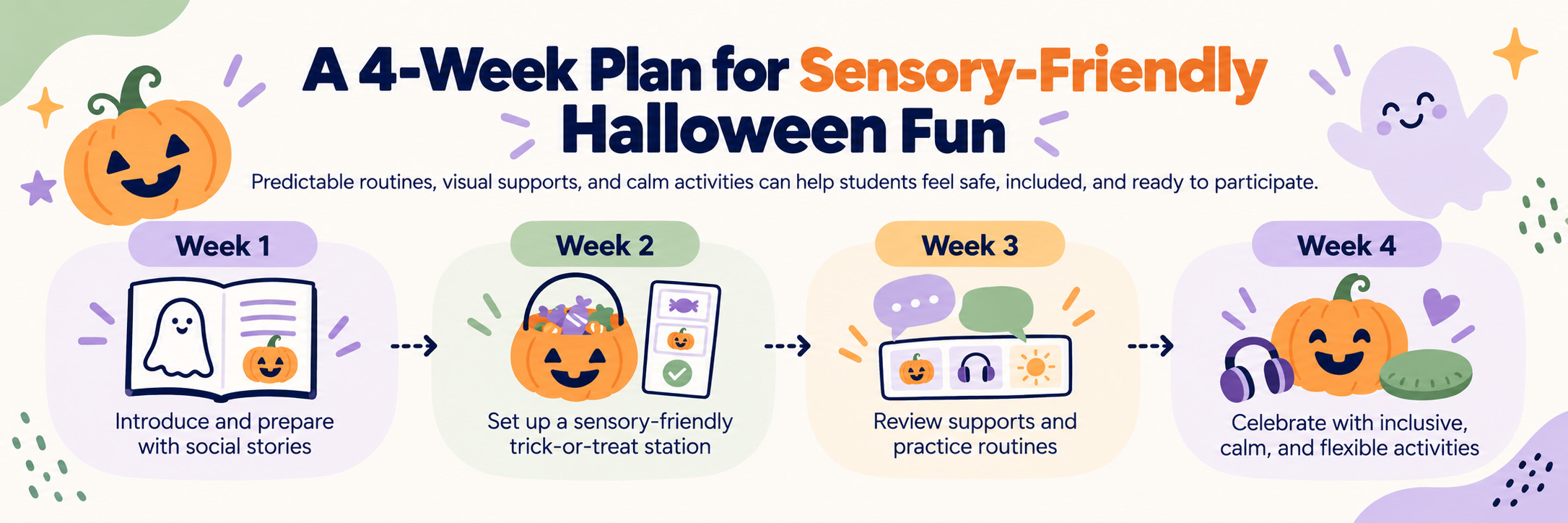
The 4-Week Sensory-Friendly Classroom Halloween Plan
Week 1: Scripting and Introduction to Halloween
-
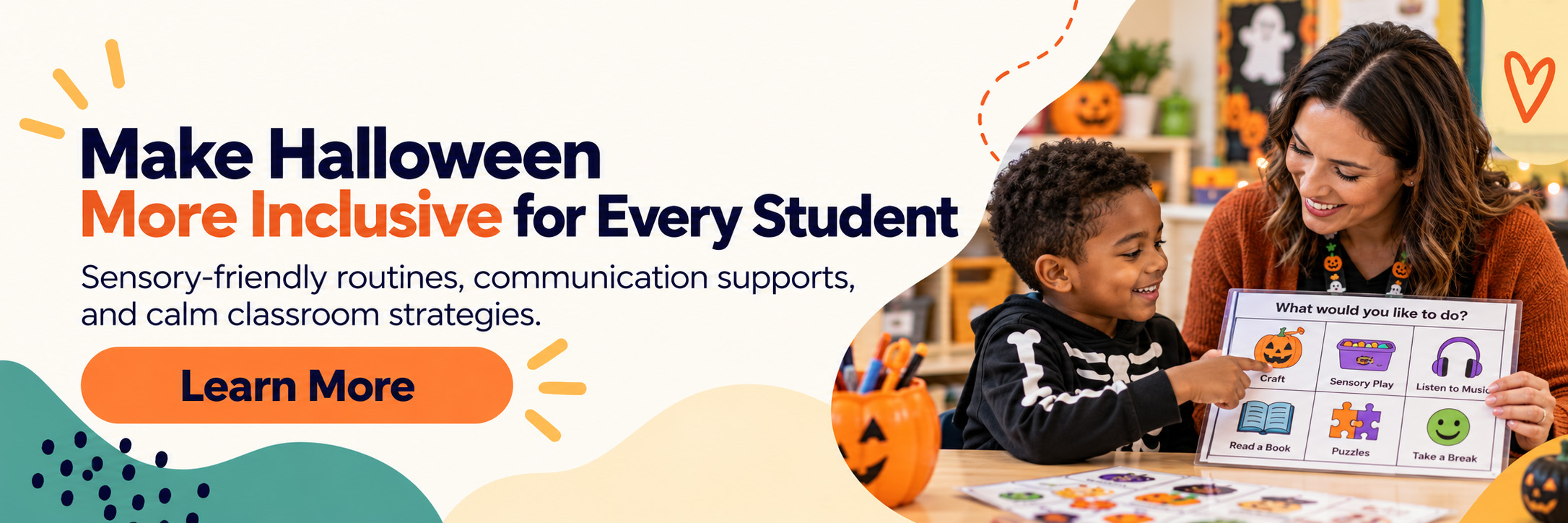
Social Stories & Choice Boards: Use social stories to introduce the concepts of Halloween and trick-or-treating, paired with visual choice boards to support diverse communication needs.
-
Predictable Circle Time Integration: Add Halloween visuals to your morning meetings or circle time. Introducing holiday elements early and predictably helps lower student anxiety.
Week 2: Low-Demand Classroom Scaffolding
-
Sensory Audits: Review your classroom environment and gather sensory-friendly practice materials.
-
In-Class Trick-or-Treat Station: Set up a single desk as a practice trick-or-treat station. Let students practice walking over and using vocal speech, gestures, or AAC (Augmentative and Alternative Communication) devices to say “Trick or Treat” and “Thank You.”
Week 3: High-Traffic Classroom Generalization
-
Collaborate with Support Staff: Partner with your Speech-Language Pathologists (SLPs), Occupational Therapists (OTs), and school nurse.
-
Guest Treat-Givers: Invite support staff into your room to act as treat-givers. This gives students the chance to generalize communication skills with familiar adults in a safe environment. Remind guests to allow extra wait time for students using AAC boards or communication switches.
Week 4: Big Boo-nanza! (Sensory-Friendly Classroom Celebration)
Hold an in-class celebration that eliminates the noise and chaos of whole-school events while maintaining the excitement of the holiday.
-
Visual Directional Cues: Use floor arrows or visual schedules to help students navigate stations smoothly.
-
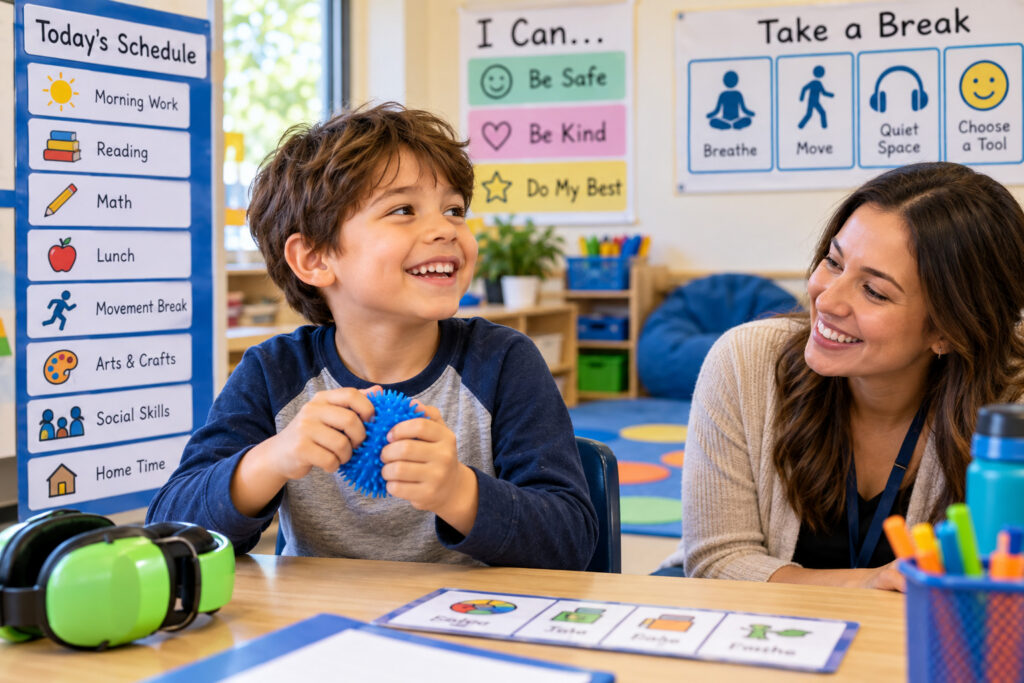
Quiet Corner Access: Maintain a dedicated, distraction-free calm-down corner for students who need a break from sensory input.
-
Inclusive Treat Bins: Ensure your stations offer both edible and non-edible sensory options so every child can participate safely.
Low-Overload Sensory Activities for Special Education Classrooms
Instead of a high-stimulation party, incorporate calm, goal-aligned sensory activities into your daily lesson plans:
-
Pumpkin Playdough Station: Offer orange and green playdough infused with calming scents like cinnamon or pumpkin spice. Provide cookie cutters, googly eyes, and pipe cleaners to build hand strength while crafting custom pumpkins.
-
Fall Texture Search Bins: Fill sensory bins with colored rice, pasta, or water beads. Hide plastic spiders or mini pumpkins, encouraging students to use tweezers or scoops to target fine motor skills.
-
Calming Sensory Bottles: Help students craft individual glitter bottles using water, clear glue, and orange or black glitter. Watching the glitter settle offers a soothing self-regulation tool.
-
Visual Recipe Snacks: Make pumpkin muffins or a “monster mix” using visual recipe cards. Practicing cooking skills provides a repetitive, highly motivating functional communication script.
Targeting Communication Goals: AAC and Social Exchanges
For Speech-Language Pathologists and special educators, a trick-or-treat routine offers a valuable setup to target expressive language and AAC generalization. Focus on two core communication exchanges:
1. Expressing the Core Request (“Trick or Treat”)
-
Vocal Communicators: Target articulation or multi-word phrase expansion.
-
AAC & High-Tech Device Users: Program speech-generating devices with phrase buttons or set up dedicated low-tech or mid-tech switches (like a BIGmack) at the practice station.
-
PECS Users: Supply clear picture communication cards for students to hand to the treat-giver.
2. Generalizing Gratitude (“Thank You”)
-
Wait-Time Pauses: When handing out treats, pause slightly before dropping the item into the bucket to prompt the student to process and express “Thank You.”
-
Alternative Gestures: Encourage high-fives, ASL signs for “thank you,” or simple head nods as valid, meaningful expressions of gratitude.
Sensory-Friendly & Inclusive Halloween Treat Guide
Sensory sensitivities, motor challenges, and dietary restrictions make traditional candy difficult for many students. Stock your treat stations with these inclusive alternatives:
Non-Edible Sensory Items (Teal Pumpkin Approved)
-
Fidget Toys: Pop-its, stress balls, or slap bracelets.
-
Creative Novelties: Holiday stickers, mini playdough tubs, or crayon sets.
-
Interactive Play: Finger puppets, bubbles, glow sticks, or sticky wall tumblers.
Soft and Easy-to-Chew Treats
-
Soft Textures: Fruit puree pouches, applesauce cups, or yogurt melts.
-
Melty Options: Plain chocolate buttons or melt-away mints requiring minimal jaw strength.
Allergy-Safe Snacks
-
Salty & Savory: Individual bags of gluten-free, dairy-free popcorn or allergen-safe potato crisps.
-
Fruit Sweets: Natural fruit leather or organic dye-free fruit snacks.
Teacher Checklist: October Halloween Prep
-
[ ] Update visual schedules with seasonal routines.
-
[ ] Introduce social stories early in the month.
-
[ ] Keep your designated calm-down area completely free of spooky lights, decorations, or sounds.
-
[ ] Organize Teal Pumpkin non-food treat buckets and allergen-safe snack bins.
-
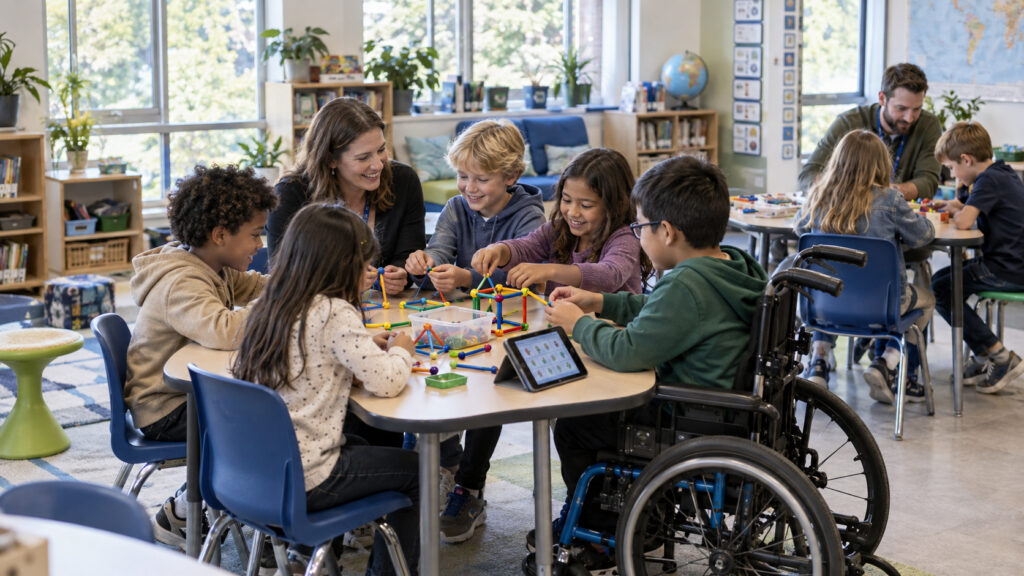
[ ] If inviting general education peers, brief them on how to interact with AAC devices, switches, and non-verbal communication styles.
By structuring Halloween as a month-long, sensory-friendly adventure rather than a single chaotic day, you can help every student feel safe, confident, and included in the celebration!