Understanding Early Signs of Autism in Toddlers
Every toddler develops differently. Some children begin speaking earlier than others. Some are naturally more social, while others prefer independent play.
Still, certain developmental differences at age two may point to autism spectrum disorder (ASD), especially when they affect communication, social interaction, behavior, and play.
Recognizing the signs of autism in a 2-year-old early can make a meaningful difference. Early support and intervention often help children build stronger communication, behavioral, and social skills during critical developmental years.
Many parents begin asking questions like:
- “Why isn’t my toddler talking yet?”
- “Why does my child avoid eye contact?”
- “Why are transitions so difficult?”
If these concerns sound familiar, you are not alone. Many families begin noticing possible autism signs during the toddler years.
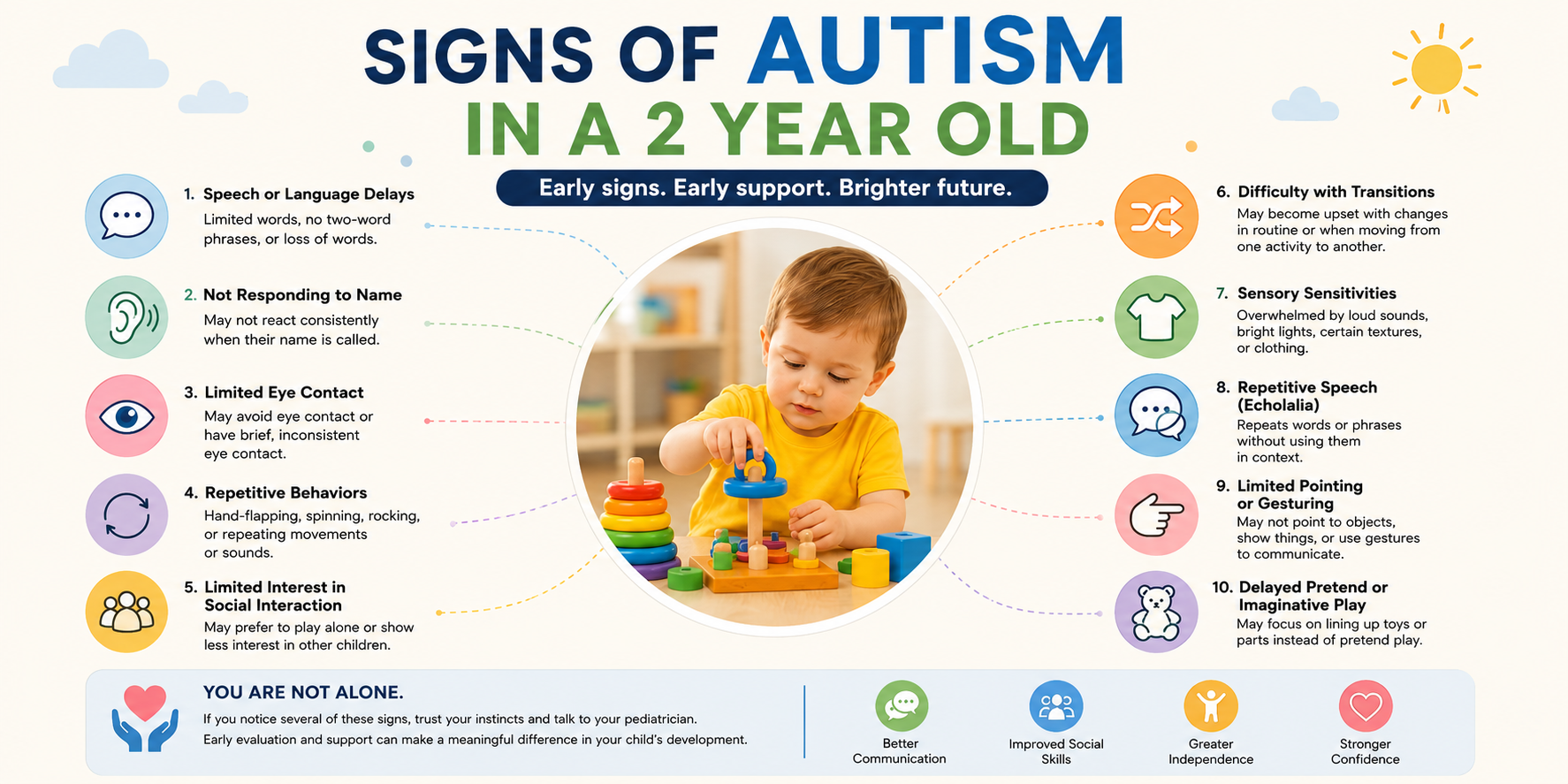
Common Signs of Autism in a 2-Year-Old
Some common early signs of autism in toddlers may include:
- Delayed speech or limited communication
- Not responding consistently to their name
- Minimal eye contact
- Repetitive behaviors like hand-flapping or spinning
- Limited interest in social interaction
- Difficulty with transitions or changes in routine
- Sensory sensitivities to sounds, lights, or textures
- Repeating words or phrases frequently
- Limited pointing or gesturing
Every child develops at their own pace, and having one or two of these signs does not automatically mean a child has autism. However, when several developmental concerns appear together, it may be time to seek professional guidance.
Speech and Communication Delays
Communication delays are often one of the earliest signs parents notice.
By age two, many toddlers:
- use simple two-word phrases
- point to objects they want
- imitate sounds and words
- attempt back-and-forth interaction
A toddler with autism may:
- use very few words
- repeat phrases without meaning
- struggle expressing wants or needs
- rarely point or gesture
- stop using words they previously learned
While some children are simply late talkers, persistent communication delays should always be discussed with a pediatrician or developmental specialist.
Limited Eye Contact and Social Interaction
Many autistic toddlers interact socially in different ways.
Possible signs include:
- avoiding eye contact
- preferring to play alone
- limited facial expressions
- not smiling back consistently
- appearing disconnected during interaction
This does not mean a child lacks affection or emotional connection. Social interaction may simply feel more challenging or less intuitive.
Repetitive Behaviors
Repetitive behaviors are another common early sign of autism.
These behaviors may include:
- hand-flapping
- rocking
- spinning objects
- lining up toys
- repeating sounds or phrases
Some repetitive behaviors help children regulate emotions, excitement, or sensory input.
Sensory Sensitivities
Many autistic toddlers experience the world more intensely.
Children may become overwhelmed by:
- loud noises
- bright lights
- clothing textures
- crowded environments
- certain food textures
Others may seek sensory stimulation by spinning, climbing, chewing objects, or crashing into furniture.
Sensory sensitivities can impact sleep, meals, transitions, and emotional regulation.
Difficulty with Transitions and Routine Changes
Children with autism often rely heavily on predictability and routine.
At age two, this may appear as:
- meltdowns during transitions
- distress over routine changes
- difficulty stopping preferred activities
- strong attachment to rituals
Even small changes can sometimes feel overwhelming.
Differences in Play
Pretend play usually begins developing around age two.
Many toddlers pretend to:
- feed dolls
- cook food
- talk on toy phones
- imitate adults
Autistic toddlers may instead:
- focus on parts of toys
- repeat the same play patterns
- line up objects repeatedly
- show limited pretend play
These differences in play can sometimes become more noticeable in daycare, preschool, or social settings with peers.
Trusting Your Instincts as a Parent
Many parents notice developmental differences long before receiving answers.
If something feels different, trust your instincts.
Seeking an evaluation early does not harm your child. In many cases, it helps families better understand how to support their child’s growth and development moving forward.
When to Seek an Autism Evaluation
If you notice multiple signs of autism in your 2 year old, consider speaking with your pediatrician or a developmental specialist.
An evaluation may include:
- developmental screenings
- speech evaluations
- behavioral observations
- autism-specific assessments
Early intervention services can often begin even before a formal diagnosis is completed.
Why Early Intervention Matters
Research consistently shows that early intervention can lead to stronger developmental outcomes for many children with autism.
Support may help improve:
- communication skills
- social interaction
- emotional regulation
- daily routines
- independence
Common therapies may include:
- ABA therapy
- speech therapy
- occupational therapy
- developmental support programs
The earlier support begins, the more opportunities children often have to build important foundational skills.
How Applied ABC Supports Families
At Applied ABC, we understand how overwhelming it can feel when you first begin noticing developmental concerns.
Our team works closely with families to provide individualized ABA therapy services designed to support communication, behavior, social development, and everyday life skills in children with autism.
We offer:
- Home-based ABA therapy
- Center-based ABA therapy
- School-based support services
- Personalized treatment plans
- Compassionate care tailored to each child’s unique needs
Our goal is not to change who your child is. Our goal is to help children build skills, confidence, and independence while supporting families every step of the way.
Supporting Your Toddler at Home
Parents play an important role in development.
Helpful strategies may include:
- creating predictable routines
- simplifying language
- using visual schedules
- reducing overwhelming sensory input
- celebrating small victories
- following your child’s interests
Progress often happens gradually. Patience, consistency, and support can make a meaningful difference over time.
Final Thoughts
Recognizing the signs of autism in a 2 year old can feel emotional and overwhelming. But awareness is powerful.
The earlier families seek guidance and support, the sooner children can access services that may help them thrive.
Most importantly, remember this:
An autism diagnosis does not define your child’s future.
Every child develops differently, and with the right support system, many children with autism continue building meaningful skills, relationships, and independence throughout their lives.