Today’s classrooms include students with a wide range of strengths, learning needs, abilities, and experiences. Creating an environment where every student can meaningfully participate requires more than placing students together in the same classroom. It requires intentional planning, collaboration, and flexible instruction.
One approach many schools use is co-teaching, where general education and special education teachers work together as equal instructional partners.
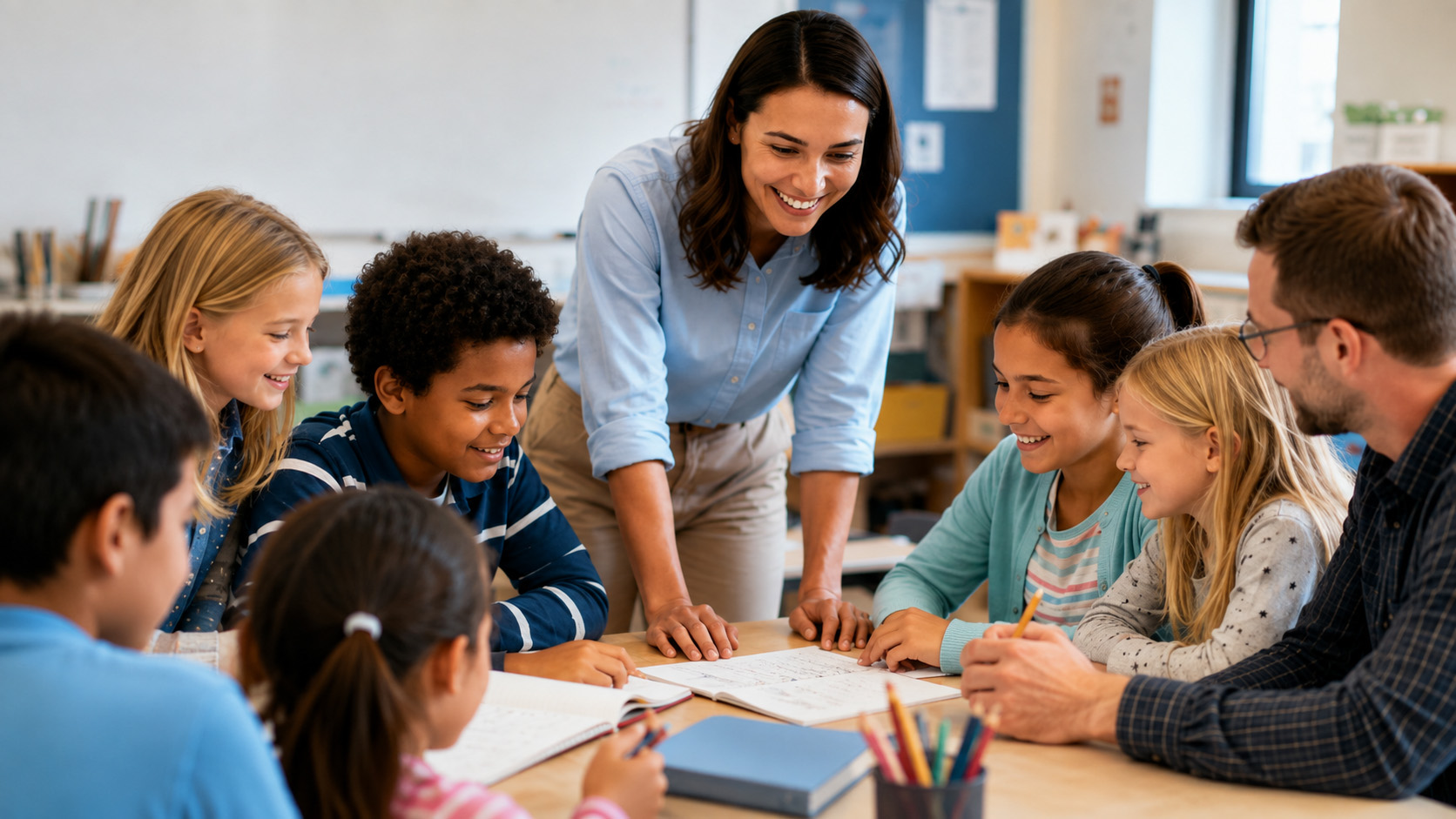
Effective co-teaching goes beyond simply sharing classroom space. Both educators contribute their knowledge, plan instruction together, support classroom routines, and share responsibility for student success.
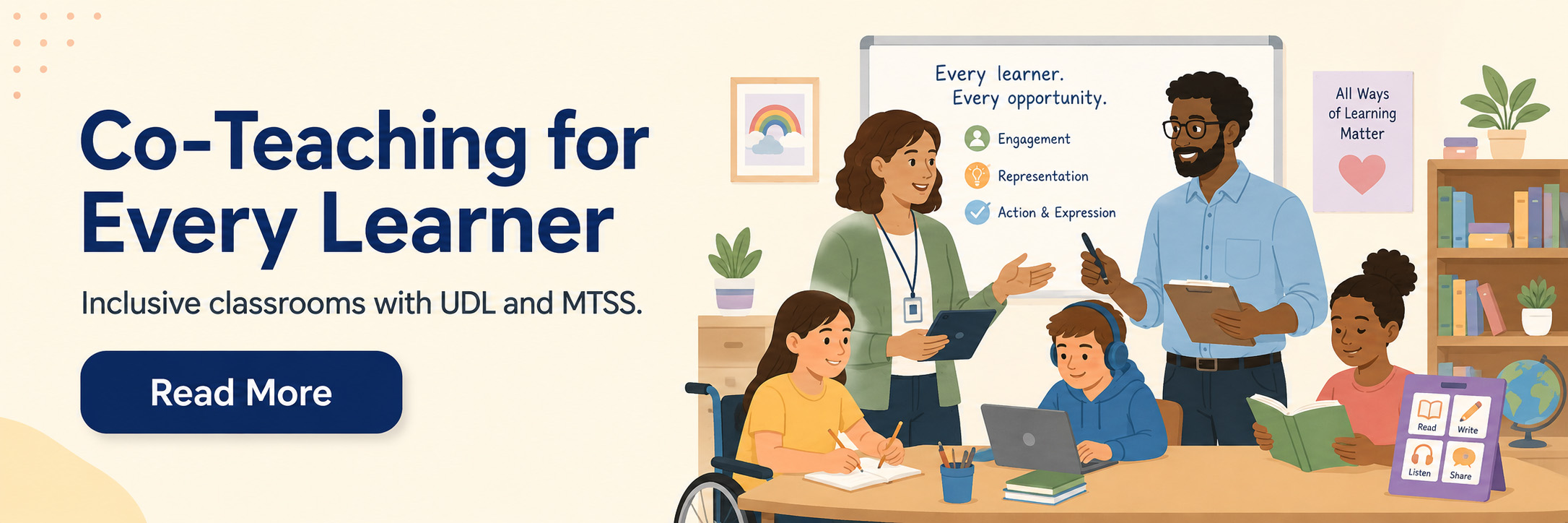
When co-teaching is supported by Universal Design for Learning (UDL) and a Multi-Tiered System of Supports (MTSS), educators can create inclusive classrooms that provide students with the right combination of access, support, and academic challenge.
Building a Strong Co-Teaching Partnership
Strong co-teaching begins with the relationship between the educators themselves.
Whenever possible, schools should consider allowing teachers to participate in selecting their co-teaching partners rather than automatically assigning partnerships. Teachers who feel comfortable working together may be more likely to communicate openly, share responsibility, and develop consistent classroom expectations.
This can be especially valuable when schools are launching new co-teaching programs or piloting inclusive instructional models.
Regardless of how teams are formed, successful co-teaching requires intentional collaboration.
Both teachers should understand the academic content, special education practices, accommodations, and the different learning needs represented in the classroom.
Joint co-teaching professional development can also help educators build a shared understanding of instructional strategies, classroom expectations, and inclusive teaching practices.
When both educators receive training together, they can develop a common language and approach to supporting students.
1. Prepare Before Co-Teaching: Establish Shared Expectations
Co-teaching works best when educators have dedicated time to plan together before instruction begins.
Whenever possible, administrators should provide co-teachers with collaborative planning time before the school year starts. If a teaching partnership changes during the year, educators should have an opportunity to establish expectations as soon as possible.
Teachers can use this planning time to discuss classroom routines, grading practices, communication, instructional responsibilities, and student supports.
Clear expectations help students recognize that both educators are equally responsible for teaching and supporting the class.
Strong preparation also helps teachers apply UDL and MTSS strategies more consistently throughout instruction.
Attend Co-Teaching Training Together
Co-teaching is a professional skill that requires communication, collaboration, and intentional planning.
Joint training can help educators:
- Understand effective co-teaching practices
- Develop shared instructional strategies
- Clarify roles and responsibilities
- Strengthen communication
- Create consistent expectations for students
Professional development can also introduce teachers to different co-teaching models and help teams decide which approaches work best for their students.
Present Both Educators as Equal Teachers
Students should see both educators as important members of the classroom team.
Simple practices can reinforce this shared responsibility.
Include both teachers’ names on:
- The classroom door
- Course syllabi
- Online learning platforms
- Classroom communications
- Family-facing materials
These details help communicate that both educators play an active role in instruction and classroom leadership.
Share Classroom Responsibilities
Co-teaching should involve shared responsibility beyond delivering lessons.
Whenever possible, both educators should participate in:
- Attendance
- Grading
- Classroom routines
- Student feedback
- Family communication
- Progress monitoring
- Instructional planning
Sharing these responsibilities helps prevent one educator from being viewed only as the primary teacher while the other is seen as an assistant.
Review Student Supports Together
Both teachers should understand the supports students need to participate successfully in instruction.
Co-teachers should review relevant IEPs, 504 plans, accommodations, and instructional supports together.
Collaborative review helps ensure that both educators understand student needs and can consistently implement appropriate supports throughout the school day.
2. Use Multiple Co-Teaching Models
A strong co-teaching classroom does not rely on one educator always leading while the other provides assistance.
When this happens consistently, students may begin to view one educator as the “real” teacher and the other as a helper. Over time, this can weaken the collaborative nature of the classroom.
Instead, co-teachers can use different co-teaching models based on the lesson, student needs, and instructional goals.
Station Teaching
In station teaching, students rotate through different learning stations while teachers lead instruction at separate stations.
Each station may focus on a different skill, activity, or part of the lesson.
Station teaching can help educators:
- Work with smaller groups
- Increase student participation
- Provide more individualized feedback
- Differentiate instruction
- Offer multiple ways for students to engage with content
This approach also aligns well with UDL because students can experience information through different activities and instructional formats.
Parallel Teaching
In parallel teaching, the class is divided into two smaller groups.
Both educators teach the same or similar content at the same time.
Smaller instructional groups can provide students with more opportunities to ask questions, participate in discussions, and receive immediate feedback.
Parallel teaching can also help educators monitor student understanding more closely and adjust instruction when needed.
How UDL Supports Inclusive Co-Teaching
Universal Design for Learning (UDL) encourages educators to design instruction that gives students multiple ways to engage with learning, access information, and demonstrate what they know.
In a co-taught classroom, two educators can collaborate to build these options directly into instruction.
For example, teachers may provide:
- Visual supports
- Verbal instruction
- Written directions
- Hands-on learning opportunities
- Small-group instruction
- Alternative ways for students to demonstrate understanding
Instead of waiting for a student to struggle before making adjustments, UDL encourages educators to design flexibility into lessons from the beginning.
How MTSS Strengthens Co-Teaching
A Multi-Tiered System of Supports (MTSS) helps schools organize academic, behavioral, and social-emotional supports based on student needs.
Co-teaching teams can use MTSS to monitor student progress and determine when additional support may be helpful.
Within an inclusive classroom, teachers may provide:
- Tier 1: High-quality instruction and supports available to all students
- Tier 2: Additional targeted instruction for students who need more support
- Tier 3: More intensive or individualized intervention when needed
Because two educators are working together, co-teaching teams may have greater flexibility to provide small-group instruction, targeted practice, and additional opportunities for student support without immediately separating students from the general classroom environment.
Co-Teaching Benefits Every Learner
Well-designed co-teaching can support much more than students receiving special education services.
Smaller instructional groups, differentiated teaching, additional feedback, and flexible learning opportunities can benefit students throughout the classroom.
When general and special education teachers collaborate effectively, they can combine their expertise to better address students’ academic, behavioral, and social-emotional needs.
The goal is not simply to place students in the same classroom. The goal is to create an environment where every learner has meaningful access to instruction and the support needed to make progress.
The Big Picture: Creating More Inclusive Classrooms
Effective co-teaching requires more than two educators sharing a classroom.
It requires shared planning, clear communication, professional development, flexible teaching strategies, and a commitment to shared responsibility.
By combining co-teaching strategies with UDL and MTSS, educators can create classrooms that respond to a wider range of learning needs while maintaining high expectations for every student.
As classrooms continue to become increasingly diverse, strong partnerships between general and special education teachers can help schools create learning environments where educators support one another and students receive high-quality, inclusive instruction.