
Making Back-to-School Easier: How ABA Can Strengthen Your MTSS Plan
The first few weeks of school set the tone for the entire year. Teachers are establishing routines, administrators are balancing staffing needs, and students are adjusting to new expectations, classmates, and environments.
For many neurodivergent students, that transition can be especially challenging. The shift from the flexibility of summer to the structure of the school day can increase anxiety, disrupt routines, and lead to behaviors that interfere with learning.
A strong Multi-Tiered System of Supports (MTSS) helps schools respond proactively rather than reactively. When evidence-based Applied Behavior Analysis (ABA) strategies are integrated into an MTSS framework, educators can create structured, supportive learning environments that help students feel successful from the very first day.
Quick Reference: ABA Strategies Across the MTSS Framework
| ABA Strategy | MTSS Focus Area | Primary Benefit for Schools |
| Predictable Classrooms | Tier 1 (Universal Support) | Prevents behavioral challenges by establishing clear expectations. |
| Taught Transitions | Routine Building | Reduces anxiety by breaking daily shifts into teachable steps. |
| Specialized Staffing | Individualized Support | Frees up teachers to focus on academic instruction. |
| Educator Coaching | Staff Collaboration | Ensures consistent implementation across classrooms and grades. |
| Baseline Data Tracking | Early Intervention | Guides timely, data-informed decisions before challenges escalate. |
5 Ways to Integrate ABA Principles into Your MTSS Framework
1. Build Predictable Classrooms from Day One
One of the greatest strengths of MTSS is its focus on prevention. Instead of waiting for behavioral challenges to arise, Tier 1 supports create classroom environments where positive behaviors are naturally more likely to occur.
Simple ABA strategies can make a meaningful difference across the entire classroom:
-
Teaching and reinforcing clear classroom expectations.
-
Establishing consistent daily routines.
-
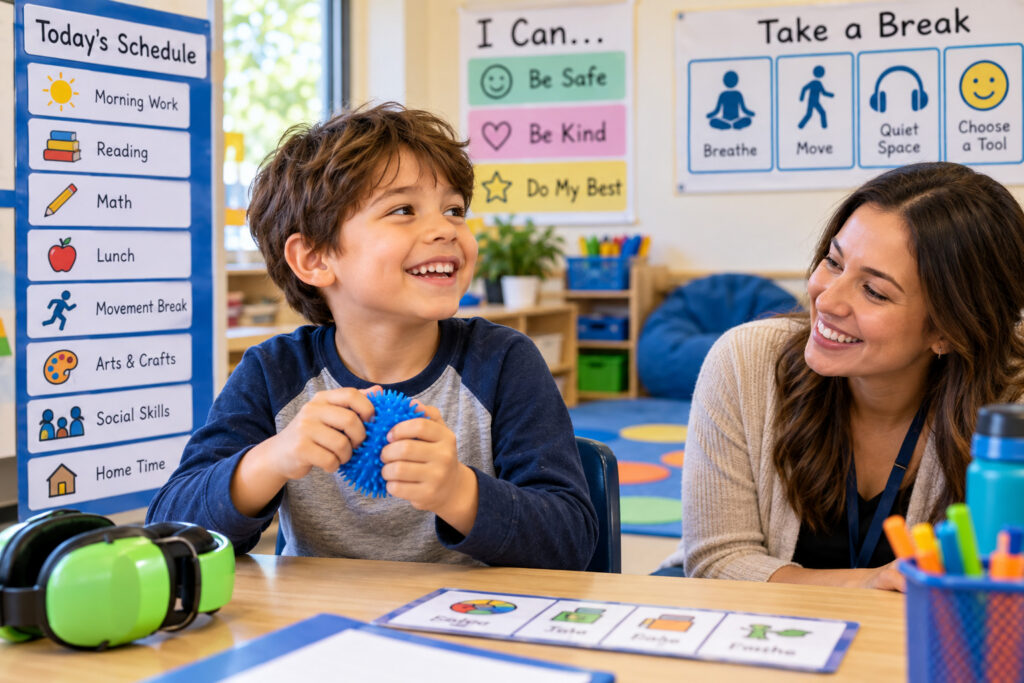
Using visual schedules and easy-to-read classroom cues.
-
Creating sensory-conscious learning environments.
-
Supporting smooth transitions between academic activities.
Key Takeaway: These universal supports benefit every student while providing essential structure for those who need it most.
2. Teach the Transition—Don’t Assume It
Returning to school requires students to learn new routines just as much as new academic content. Taking time to intentionally teach those routines can reduce anxiety and build confidence.
Schools can proactively support students by:
-
Walking through arrival and dismissal procedures step-by-step.
-
Practicing classroom and hallway transitions before expectations increase.
-
Previewing daily schedules with visual supports and reminders.
-
Breaking routines into manageable, teachable components.
These simple practices help students develop familiarity early, often preventing behavioral challenges before they begin.
3. Provide Extra Support Where It’s Needed Most
The beginning of the school year is often one of the busiest times for educators. Staffing shortages, new student needs, and classroom setup can make it difficult to provide individualized behavioral support.
When additional help is available, teachers are better able to focus on instruction while students receive the targeted assistance they need to participate successfully in the classroom.
That is where school-based behavioral professionals—including Registered Behavior Technicians (RBTs) and Board-Certified Behavior Analysts (BCBAs)—make an immediate impact. At Applied ABC, we partner with districts to provide behavioral staffing and consultation that expands school teams’ capacity during the critical first weeks of school.
4. Strengthen MTSS Through Coaching and Collaboration
Even the best behavior supports are most effective when they are implemented consistently across classrooms.
Ongoing coaching helps educators:
-
Strengthen classroom management techniques.
-
Reinforce positive student behaviors.
-
Improve daily transitions.
-
Apply behavioral interventions with confidence.
It also creates consistency across grade levels and settings, giving students predictable expectations throughout the entire school day. Applied ABC’s BCBAs work alongside teachers and administrators to provide in-the-moment coaching, model evidence-based strategies, and support consistent implementation across school teams.
5. Let Data Guide Your Next Steps
The first few weeks of school provide valuable information about how students adjust to new environments and expectations. Collecting behavioral baseline data early allows school teams to:
-
Identify trends in student behavior.
-
Determine whether additional Tier 2 or Tier 3 support is needed.
-
Make informed decisions before challenges become more significant.
Whether districts use paper documentation or digital platforms, consistent data collection is essential to effective MTSS implementation. At Applied ABC, our teams use digital tools—including ATrack—to collect real-time behavioral data and collaborate with school teams to make timely, data-informed decisions.
A Strong Start Leads to a Strong School Year
Back-to-school success is not about responding to challenges after they occur—it is about creating the conditions that help students succeed from the beginning.
By combining proactive ABA strategies with a strong MTSS framework, schools can establish predictable classrooms, support educators, identify student needs early, and create learning environments where every student has the opportunity to thrive.
Ready to Strengthen Your School’s MTSS Framework?
Applied ABC partners with school districts to provide school-based ABA services, behavioral staffing, consultation, and coaching that strengthen MTSS implementation throughout the school year.
Connect with an Applied ABC District Services Coordinator today to learn how we can support your schools, your staff, and your students this year. Together, let’s make the 2026–2027 school year the best one yet!