

Supporting Elementary Students with Autism and Hyperactivity: How We Can Help
Many elementary students with autism also experience hyperactivity. They may have trouble sitting still, act on impulse, or need to move around often. These challenges can make the school day harder, but with the right support, they can become opportunities for growth.
Understanding the Connection Between Autism and Hyperactivity
Hyperactivity in children with autism can have several causes. Common ones include sensory processing differences, frustration with communication, and a co-occurring diagnosis like ADHD. Understanding the cause behind a student’s behavior is the first step toward choosing the right support.
Signs of Hyperactivity in Children with Autism
Parents and teachers may notice a child:
- Having trouble staying seated during class or lunch
- Fidgeting with their hands or nearby objects
- Interrupting others or struggling to wait their turn
- Moving between activities before finishing them
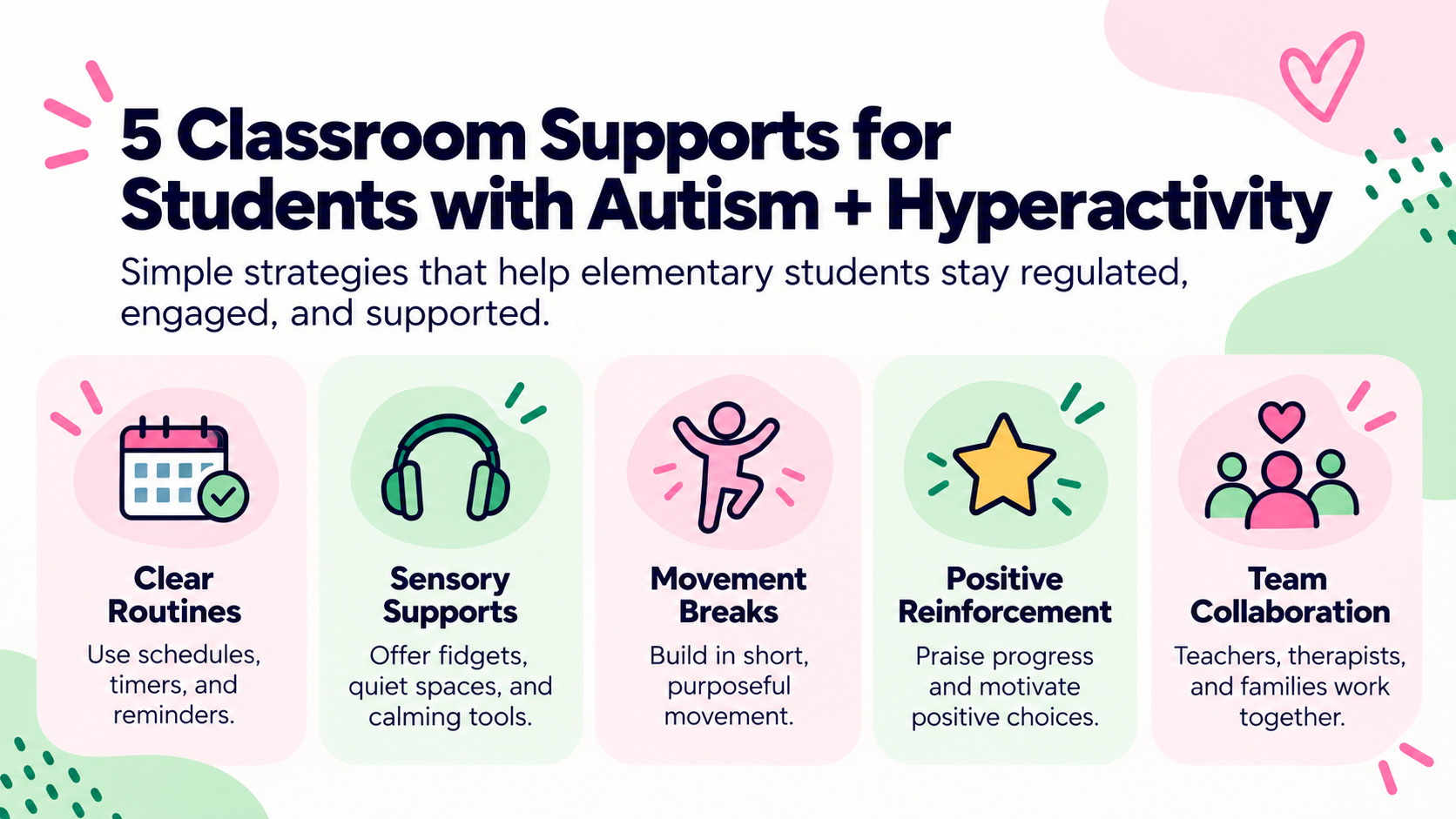
5 Strategies to Support Students with Autism and Hyperactivity
1. Create Clear Routines and Schedules
Most students, especially those with autism, do their best when they know what to expect. Consistent routines can lower anxiety and reduce impulsive behavior. Visual schedules, timers, and simple reminders help students understand what’s coming next.
2. Offer Sensory Supports
Sometimes hyperactivity is a student’s way of coping with too much or too little sensory input. The classroom, cafeteria, gym, and hallways can all be sources of that input. Sensory breaks, fidget tools, and a quiet space help students stay calm and regulated.
3. Build in Movement Breaks
Planned movement breaks give students a positive outlet for extra energy. Stretching, jumping, or a quick walk can all help. Some schools add sensory walks in hallways or set up dedicated spaces where students can take a purposeful break.
4. Use Positive Reinforcement
Celebrate when things go well! Consistent, specific praise encourages students to repeat positive behaviors and choices. Pay attention to what motivates each student, and check in on their preferences often, since interests can change quickly.
5. Collaborate with Professionals
Teachers, therapists, and specialists can work together to build strategies that fit each student. Occupational therapists can suggest sensory and behavior supports. Board Certified Behavior Analysts (BCBAs) can design individualized plans that carry over from home to school.
Supporting Social and Emotional Growth
Students with autism and hyperactivity may find it hard to make and keep friends. Social skills groups provide direct instruction in understanding emotions, taking turns, and reading social cues. That instruction helps students feel more confident and connected to their peers.
Encouraging Self-Advocacy
Teach students to recognize when they need something and how to ask for it. Simple scripts or visual cards make it easier to request a break or a sensory tool. That builds independence that lasts beyond elementary school.
How Applied ABC Can Help
At Applied ABC, we offer ABA therapy designed around each child’s needs, including support for autism and hyperactivity. Families can choose the setting that works best for them:
- Center-based therapy: One-on-one sessions and group activities in a warm, nurturing environment.
- Home-based therapy: One-on-one sessions in your home, for flexibility and convenience.
- Social skills groups: In-person or virtual groups that help children build social skills and self-confidence.
- Summer ABA therapy: Fun, therapeutic summer programs that keep progress going during the school break.
Contact us to find the right fit for your child.
Frequently Asked Questions
Can a child have both autism and ADHD?
Yes. ADHD commonly co-occurs with autism, and a child can be diagnosed with both. A clinician can help determine whether hyperactivity is linked to ADHD, sensory needs, or another cause.
What helps a hyperactive child with autism focus in class?
Predictable routines, visual schedules, sensory tools, and regular movement breaks all help. Positive reinforcement for on-task behavior helps too.
Can ABA therapy help with hyperactivity?
Yes. ABA therapy can teach self-regulation, waiting, and replacement behaviors, and it gives families and teachers consistent strategies to use across settings.

Conclusion
Supporting elementary students with autism and hyperactivity takes patience, creativity, and teamwork. When we understand each child’s needs and offer the right support, we help them succeed in school, with friends, and in life.