
What happens when structure meets flexibility in the classroom? At first glance, Applied Behavior Analysis (ABA) and Universal Design for Learning (UDL) might seem like an unlikely pair. One is known for its data-driven precision, the other for its adaptable, student-centered approach. But together, they create something powerful: learning environments that are both highly supportive and deeply inclusive.
Applied ABC helps schools bring these two frameworks together in meaningful ways. By providing qualified professionals and hands-on support, we partner with educators to integrate ABA strategies into UDL-designed classrooms—so every student can access learning in a way that works for them.
Where ABA and UDL Meet
While ABA and UDL come from different traditions, they share a common goal: helping every student succeed through intentional, responsive teaching.
Data-Informed Flexibility
ABA offers detailed insights into student performance, giving educators clear data on what’s working and what’s not. UDL takes that information and turns it into action—encouraging flexible options for learning. For example, if a student struggles with written expression, UDL opens the door to alternatives like speech-to-text tools or visual presentations.
Engagement That Matters
UDL emphasizes choice as a driver of engagement, while ABA helps identify what truly motivates each learner. When combined, educators can offer meaningful choices that are not just engaging but also reinforced in ways that encourage continued success.
Scaffolding Toward Independence
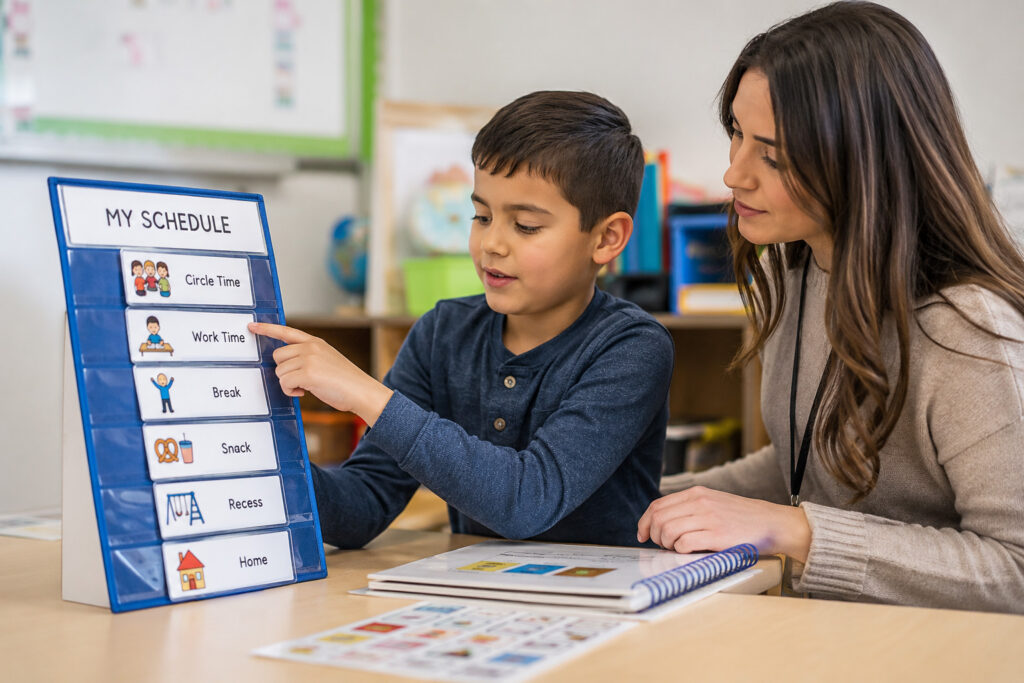
ABA strategies like prompting and fading naturally align with UDL’s focus on scaffolding. Students receive the support they need early on, and that support is gradually reduced as their independence grows. The result? Learners who build confidence alongside competence.
Bringing It to Life in the Classroom
Integrating ABA and UDL doesn’t require a complete overhaul—it starts with thoughtful, intentional steps.
Design with Flexibility, Teach with Precision
Begin by planning lessons using UDL principles, offering multiple ways for students to access content and show what they know. Then, use ABA strategies like task analysis and reinforcement to explicitly teach those options and support student success.
Use Data to Guide Decisions
Collect both academic and behavioral data to understand which supports are effective. ABA helps pinpoint what works best for each student, allowing educators to continuously refine their approach within a UDL framework.
Moving Forward
When ABA and UDL work together, classrooms become more than just inclusive—they become empowering. Educators gain the tools to respond to individual needs with both structure and flexibility, while students benefit from environments designed for their success from the start.
Applied ABC is here to support that journey. Whether you’re just getting started or looking to deepen your practice, we’re ready to partner with you to build learning environments that truly work for all students.